
Relationships · August 21, 2026 · 2 min read
The pursue-withdraw loop: why the same fight keeps happening
One partner moves closer to feel safe, the other moves back to feel safe. Both are protecting themselves, and the loop tightens. Here is how to step out of your half of it.
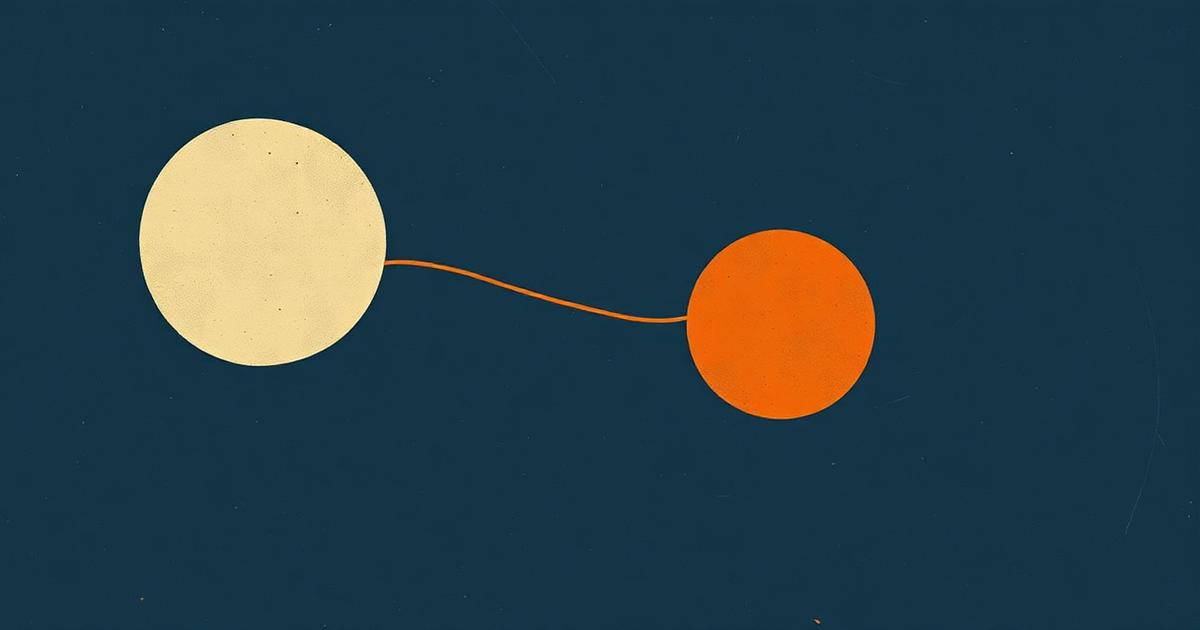
Most recurring conflicts in a relationship are not about the dishes, the tone, or the phone. They are one loop running on repeat: one person seeks reassurance to feel safe, the other seeks space to feel safe, and each move confirms the other person's worst read of the situation.
If you lean anxious, distance feels like a countdown. So you close it - a follow-up text, a "are we okay?", a longer conversation tonight. If your partner leans avoidant, intensity feels like a demand they will fail. So they buy time - shorter answers, a walk, "can we talk later". You read the delay as leaving. They read the pursuit as pressure. Both of you speed up.
Nobody wins this by being right about who started it. The loop has no first cause you can find in the moment, and hunting for one is usually just the argument continuing in a smarter voice.
What actually breaks it is one person changing the speed of their half.
For the anxious side, that means putting a gap between the urge and the reach. Not silence, not punishment - a real gap, three to twenty minutes, in which you regulate first and decide second. Almost every message sent from the middle of a spike says the same thing twice as loudly as it needs to, and it lands as pressure even when the underlying need is completely fair.
Then make the ask small and specific. "Can you tell me when you're free to talk?" is answerable. "Do you even want to be in this?" is a test, and tests get failed. Specific asks give an avoidant partner something they can say yes to without feeling swallowed.
It also helps to say the feeling without attaching a verdict to it. "I got anxious when plans changed" is information. "You clearly don't care" is a conclusion your partner now has to argue with instead of respond to.
And keep a record. Write down what you were sure was happening and what actually happened. Over a month, most people find their prediction accuracy is low - not because their needs are wrong, but because the alarm is louder than the situation. That evidence is what makes the pause feel worth it next time.
Two honest caveats. First, this is not a technique for staying in a relationship where someone is cold, contemptuous, or unwilling to talk at all; a pause is for regulating yourself, not for absorbing bad treatment. Second, if the loop is entrenched, a couples therapist trained in attachment work will move you faster than any app. Pause Protocol is built for your half of the loop - the minutes where you decide what to do next.
Keep reading
More from the anxious-attachment journey.
Relationships · August 31, 2026 · 2 min read
Anxious attachment relationship dynamics: the loop has two engines
Protest behaviour, reassurance debt and conflict velocity — the two-person patterns behind anxious attachment, and the two agreements that change most couples.
Guide · August 31, 2026 · 5 min read
How to stop texting someone: texting anxiety and the pursue-withdraw loop
You do not need more willpower to stop texting someone — you need somewhere for the next twenty minutes to go. Here is how texting anxiety feeds the pursue-withdraw loop, and the five-step method that breaks it.
Guide · August 31, 2026 · 3 min read
Attachment styles explained: secure, anxious, avoidant and disorganised
A plain guide to the four adult attachment styles — what each one is protecting, how they pair up, and why the labels are patterns rather than personality types.
Practice · August 31, 2026 · 4 min read
Anxious attachment in real life: six scenarios and what to do in each
The read receipt, the weekend away, the vague "we need to talk", the party you were not invited to. Six situations that reliably set off anxious attachment, with a concrete script for each.
Free worksheet
Or browse the free anxious attachment toolkit — worksheets, journal prompts and a printable guide.